Arts
PARK CHAN WOOK TAKES THE CANNES JURY CHAIR FROM OLDBOY TO DECISION TO LEAVE
79th EDITION, 12-24th MAY 2026
Cannes Films festival logo (Source: Courtesy Cannes Film Festival )
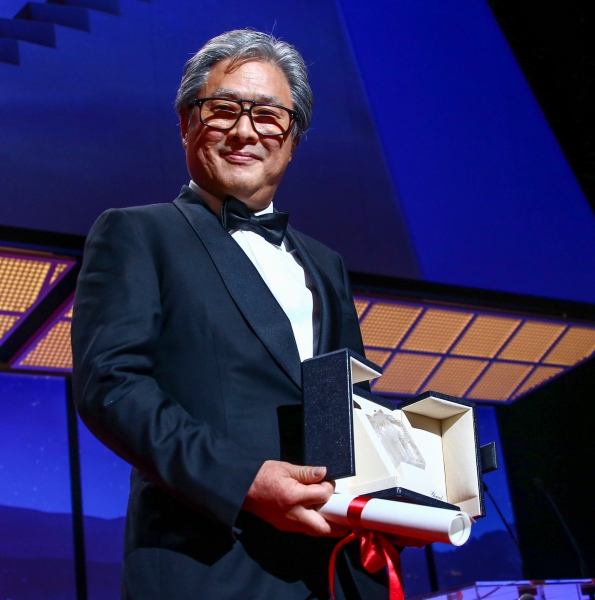
Park Chan Wook PALME 2022
(Source: Courtesy Park Chan Wook )
(Source: Courtesy Park Chan Wook )
This is an editorial cultural analysis, not an on the ground report, based on official festival announcements, based on official statements and serious film industry sources and my own experience as a long time correspondent on the Croisette. Over the past two decades, twelve visually spectacular and narratively daring features have turned Park Chan wook into one of the most fascinating figures in contemporary cinema, a filmmaker whose work balances cruelty and tenderness, genre thrills and moral unease. His appointment as president of the 2026 Cannes Film Festival Competition jury is more than a personal reward: it marks the moment when a director who once came to the festival as an outsider with a violent, almost underground revenge story is now invited to arbitrate the most prestigious selection in the world. Oldboy’s Grand Prix in 2004 first made him a cult name; later prizes for Thirst, The Handmaiden and Decision to Leave confirmed that his cinema of obsession and meticulous mise en scene had become part of Cannes’ own DNA, just as Korean cinema moved from the fringes of the programme to its centre.
PARK CHAN WOOK, FROM “OLDBOY” TO THE 2026 PALME D’OR
The Cannes Film Festival’s communique reminds us that twelve spectacular feature films have made Park Chan wook one of the most fascinating figures in contemporary cinema. Internationally acclaimed as a director, screenwriter and producer, he will preside over the Jury for Feature Films in Competition at the 79th Festival de Cannes, a first for Korean cinema. On Saturday 23 May, on the stage of the Grand Théâtre Lumière, Park Chan wook and his jury will award the 2026 Palme d’Or, succeeding last year’s winner: Jafar Panahi, honoured for” It Was Just an Accident” film.
The Cannes Film Festival’s communique reminds us that twelve spectacular feature films have made Park Chan wook one of the most fascinating figures in contemporary cinema. Internationally acclaimed as a director, screenwriter and producer, he will preside over the Jury for Feature Films in Competition at the 79th Festival de Cannes, a first for Korean cinema. On Saturday 23 May, on the stage of the Grand Théâtre Lumière, Park Chan wook and his jury will award the 2026 Palme d’Or, succeeding last year’s winner: Jafar Panahi, honoured for” It Was Just an Accident” film.
Visceral, subversive and baroque, Park’s films are bold in every way in script, in style and in morality. Yet the virtuoso director never strays from a symbolic social message or from his audience, whom he plunges into dark, disturbing worlds that can be terrifying, exhilarating, erotic, or all of these together. As Festival President Iris Knobloch and General Delegate Thierry Fremaux put it, his “inventiveness, visual mastery, and penchant for capturing the multiple impulses of women and men with strange destinies have given contemporary cinema some truly memorable moments,” and his presence at the Palais des Festivals is a way to celebrate both his immense talent and “the cinema of a country deeply engaged with the questioning of our time.”
A LONG STANDING LOVE STORY BETWEEN CANNES AND KOREAN CINEMA
For Park Chan wook himself, it all began in Cannes with Oldboy, which won the Grand Prix in 2004. Since then, almost all of his Competition entries have been rewarded: Thirst (Jury Prize 2009), The Handmaiden (2016) and Decision to Leave (Best Director 2022). From Sympathy for Mister Vengeance and Lady Vengeance to his recent No Other Choice, he has built a filmography where revenge, obsession and the clash between love and death are explored through virtuoso images and extraordinary heroines.
For Park Chan wook himself, it all began in Cannes with Oldboy, which won the Grand Prix in 2004. Since then, almost all of his Competition entries have been rewarded: Thirst (Jury Prize 2009), The Handmaiden (2016) and Decision to Leave (Best Director 2022). From Sympathy for Mister Vengeance and Lady Vengeance to his recent No Other Choice, he has built a filmography where revenge, obsession and the clash between love and death are explored through virtuoso images and extraordinary heroines.
The Festival communique places this in a wider history. At the turn of the millennium, Korean cinema swept onto the Croisette: Im Kwon taek, Hong Sang soo, Kim Ki duk, Lee Chang dong, Kim Jee woon, Yeon Sang ho, Byun Sung hyun, Lee Won tae… Their films have moved from Un Certain Regard to Competition, to Midnight Screenings, forming a wave crowned by Bong Joon ho’s Palme d’Or in 2019 for Parasite. Korean actors have also been honoured, from Jeon Do yeon (Best Actress for Secret Sunshine) to Song Kang ho (Best Actor for Broker), who has appeared in four of Park Chan wook’s films. Park’s presidency therefore symbolises Cannes’ early and deep attachment to Korean cinema, whose treasures are restored year after year and whose contemporary works attract millions of spectators.
ACCESSIBILITY ON THE CROISETTE: WHEN A FESTIVAL TAKES DISABILITY SERIOUSLY
Beyond the cinephile excitement, this announcement also says something very concrete about how Cannes treats the professionals who follow it. Unlike other major ceremonies, the Cannes Film Festival has continued to accredit our correspondent before, during and after the onset of her disability. Over the years, the organisation has progressively improved its welcome for visitors and journalists with disabilities: specific badges indicating disability, the possibility of accrediting an accompanying person, better signposted accessible routes, and a press conference room made reachable thanks to the installation of a small lift rather than a flight of steps that used to be impassable.
Beyond the cinephile excitement, this announcement also says something very concrete about how Cannes treats the professionals who follow it. Unlike other major ceremonies, the Cannes Film Festival has continued to accredit our correspondent before, during and after the onset of her disability. Over the years, the organisation has progressively improved its welcome for visitors and journalists with disabilities: specific badges indicating disability, the possibility of accrediting an accompanying person, better signposted accessible routes, and a press conference room made reachable thanks to the installation of a small lift rather than a flight of steps that used to be impassable.
It is not perfect yet, and there is still work to be done on crowd management, last minute changes and the fatigue imposed by long days in an environment designed first for able bodied bodies. But compared with other events that quietly stop accrediting journalists once they switch to a wheelchair, Cannes Film festival stands out: an access desk and host teams trained to welcome disabled guests, a real effort to reconcile red carpet glamour with the basic right to enter the building. In a world where inclusion is often a slogan, this matters, especially when the official selection claims to be attentive to all the fractures of our time. Yet not able to climb the most praised and notorious the red carpet stairs...Wait and see, we never know, things can evolve to get fully inlcusive !
“THE THEATRE IS DARK SO THAT WE MAY SEE THE LIGHT OF CINEMA”
In the communique, Park Chan wook himself gives a kind of poetic manifesto for his upcoming role. “The theatre is dark so that we may see the light of cinema,” he says. “We confine ourselves within the theatre so that our souls may be liberated through the window of film. To be enclosed in a theatre to watch films, and enclosed again to engage in debate with the members of the Jury, this double, voluntary confinement is something I await with great anticipation. In this age of mutual hatred and division, I believe that the simple act of gathering in a theatre to watch a single film together, our breaths and heartbeats aligning, is itself a moving and universal expression of solidarity.”
In the communique, Park Chan wook himself gives a kind of poetic manifesto for his upcoming role. “The theatre is dark so that we may see the light of cinema,” he says. “We confine ourselves within the theatre so that our souls may be liberated through the window of film. To be enclosed in a theatre to watch films, and enclosed again to engage in debate with the members of the Jury, this double, voluntary confinement is something I await with great anticipation. In this age of mutual hatred and division, I believe that the simple act of gathering in a theatre to watch a single film together, our breaths and heartbeats aligning, is itself a moving and universal expression of solidarity.”
There is no doubt that hearts will be beating intensely on 12 May, when the 79th Festival de Cannes opens its doors. For Park Chan wook, it will be a new chapter in a dialogue between Korean cinema and the Croisette. For all those who have been following the Festival from wheelchair level for years, it will also be another test of how far the world’s most famous red carpet is ready to go to ensure that the “dark theatre” he evokes remains open, in practice, not just in words , to every spectator and every journalist, whatever their body and whatever their story…To Be continued../ (Source: Pres Release Cannes Film Festival)
This is a field report. It is based on the official communique of the Festival de Cannes and long term coverage by our handy journalist, who has been accredited to the Festival for more than two decades before, during and after becoming , disabled wheelchair user. Unlike other French film events, Cannes has taken her disability into account, continues to welcome her, warmly, accredit her, and has progressively improved accessibility for visitors and journalists with disabilities.
Liability for this article lies with the author, who also holds the copyright. Editorial content from USPA may be quoted on other websites as long as the quote comprises no more than 5% of the entire text, is marked as such and the source is named (via hyperlink).