
Politics
FRENCH–MOROCCAN PM SIGNED CONTRACTS AT RHN FROM TARMAC TO MAUSOLEUM MOHAMED V
CHERIFIEN EMPIRE NEW SEQUENCE RABAT 2026
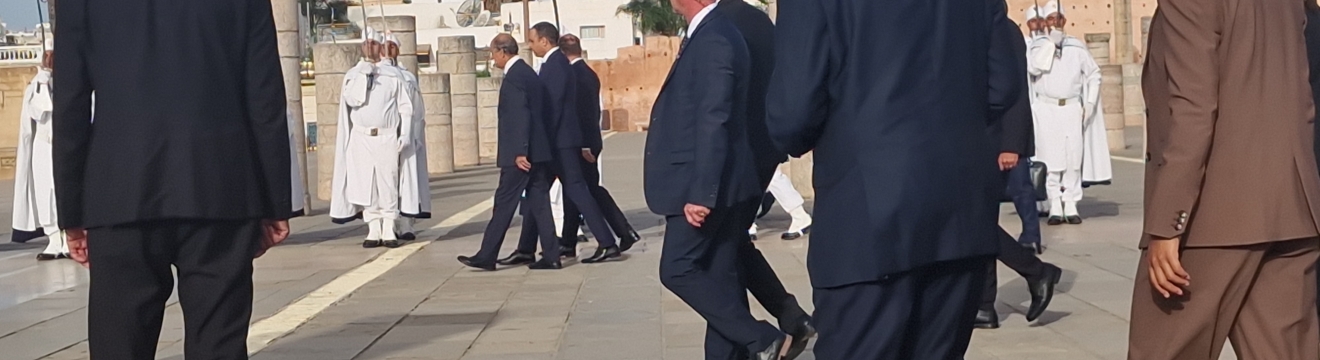
PM Lecornu & Akhannouche Mausoleum Mohamed V, Raba (Source: Rahma Sophia Rachdi, Jedi Foster)
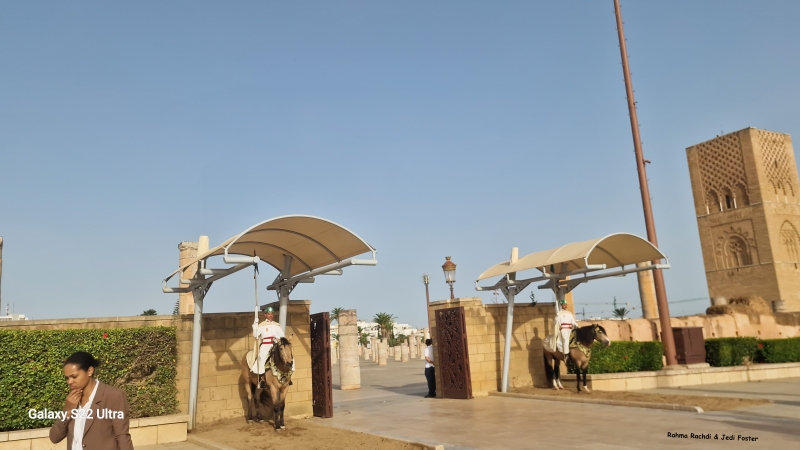
PM Lecornu/Akhannouche Mausoleum Mohamed V, Rabat
(Source: Rahma Sophia rachdi Jedi Foster)
(Source: Rahma Sophia rachdi Jedi Foster)
Between these two electoral horizons, the RHN (HLM, High Level Meeting) functions as a hinge: a moment where both executives seek to stabilise a “Reinforced Exceptional Partnership” before their domestic politics potentially shift. It is in this interstice that the Rabat meeting takes place, under the gaze of the monarchy in Morocco and under the pressure of future ballot boxes in France.
That visit, he said, “constituted a founding moment in the evolution of our bilateral relations” and established a “Reinforced Exceptional Partnership” at the measure of historical links, existing achievements and shared challenges.
PRIME MINISTER AKHANNOUCH: FROM POLITICAL CONVERGENCE TO HUMAN TIES
For Aziz Akhannouch, the head of Moroccan government, the Reinforced Exceptional Partnership “has opened a new page in relations between our two countries,” tracing “an ambitious course founded on an affirmed political convergence, a renewed economic momentum, and a shared will to prepare the future together.” The Rabat RHN (HLM) “marks the entry into the operational implementation phase of this common vision and testifies to the determination of our two governments to transform the commitments made into tangible results.”
For Aziz Akhannouch, the head of Moroccan government, the Reinforced Exceptional Partnership “has opened a new page in relations between our two countries,” tracing “an ambitious course founded on an affirmed political convergence, a renewed economic momentum, and a shared will to prepare the future together.” The Rabat RHN (HLM) “marks the entry into the operational implementation phase of this common vision and testifies to the determination of our two governments to transform the commitments made into tangible results.”
On politics and strategy, he underlined that Morocco and France have deepened their consultation “on major regional and international issues, in a spirit of mutual trust, shared responsibility and reciprocal respect,” in a world context marked by “accumulation of crises and uncertainties.” He explicitly “saluted the position of France in favour of the territorial integrity of the Kingdom of Morocco and the marocanité of the Sahara,” i.e the sovereignty of Moroccan Sahara, which has “contributed to establishing a climate of reinforced confidence and to opening new prospects for cooperation.”
INSOLENT MOROCCAN GROWTH, “MAROCANITÉ”, STABILITY AND SOVEREIGNTY OFFERS A WINDOW FOR PEER TO PEER PARTNERSHIPS
In economic terms, Morocco’s trajectory gives political weight to this new phase: according to IMF projections, the kingdom is posting what many analysts describe as “insolent growth”, approaching 4.9% in 2025, in a global context where few emerging economies maintain such a rhythm. This macro?dynamic reinforces Rabat’s ambition to be seen not as a junior partner, but as a sovereign power structuring its own development model and demanding relations “peer?to?peer”.
Across the Mediterranean, France is facing a very different landscape: according to its own Ministry of Economy and Finance, growth hovers around 0.7%, a level that underlines the urgency of diversifying activity and working to bring a still negative trade balance back towards positive territory.
In that perspective, turning towards more dynamic and friendly partners such as Morocco a country combining macroeconomic resilience, political stability and a clear sense of marocanité and sovereignty offers Paris not only an outlet for its companies, but a genuine opportunity to build peer?to?peer partnerships anchored in shared interests rather than nostalgia.
“MAROCANITE”/“MOROCCONESS”, AFFIRMATIVE STATEMENT OF STRONG MORROCAN IDENTITY
In his opening remarks, Prime Minister Aziz Akhannouch “saluted the position of France in favour of the territorial integrity of the Kingdom of Morocco and the marocanité of the Sahara”, stressing that this evolution “has contributed to establishing a climate of reinforced confidence and to opening new prospects for cooperation” between the two countries.
For Prime Minister Akhannouch, this explicit recognition of the marocanité of the Sahara the fact that the Sahara is not only under Moroccan sovereignty in legal terms, but forms part of Morocco’s historical and national identity marks a qualitative shift in the bilateral relationship.
In this context, the distinction between Marocanite and Moroccan sovereignty matters. Marocanité often translated as “Morocconess” refers first to identity: the historical, cultural and political belonging of the Sahara to the Moroccan nation, anchored in the Empire Cherifien’s genealogy, in allegiance ties and in the way the monarchy conceives the unity of its territory and people. Moroccan sovereignty, by contrast, speaks the language of law and borders: it is the
PM AKHANNOUCH RECALLS THE MAJOR AXES OF FRANCO-MOROCCAN COOPERATION
Economically, Prime Minister Akhannouch noted that since October 2024 “significant progress has been made in all the domains identified as priorities by the two Heads of State,” with accelerated projects in industry, infrastructure, renewable energy, logistics, innovation and productive investment. Energy transition, industrial decarbonisation, next?generation infrastructure, rail and port connectivity and new value chains now form “major axes of our cooperation,” alongside the essential banking?services dimension, where a concerted approach allowed Moroccan banks to continue their activity in France following the transposition of the CRD VI Directive.
Economically, Prime Minister Akhannouch noted that since October 2024 “significant progress has been made in all the domains identified as priorities by the two Heads of State,” with accelerated projects in industry, infrastructure, renewable energy, logistics, innovation and productive investment. Energy transition, industrial decarbonisation, next?generation infrastructure, rail and port connectivity and new value chains now form “major axes of our cooperation,” alongside the essential banking?services dimension, where a concerted approach allowed Moroccan banks to continue their activity in France following the transposition of the CRD VI Directive.
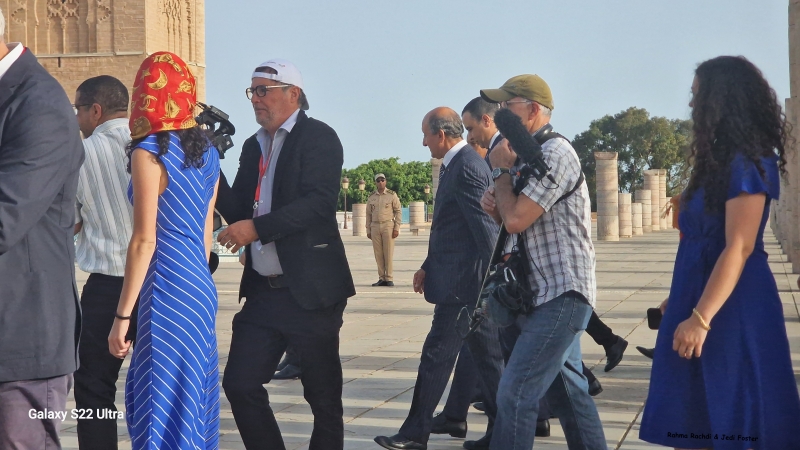
PM Lecornu/Akhannouche Mausoleum Mohamed V, Rabat
Source: Rahma Sophia Rachdi, Jedi Foster
Source: Rahma Sophia Rachdi, Jedi Foster
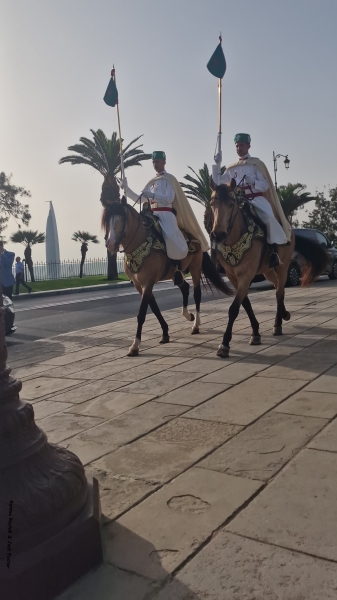
PM Lecornu/Akhannouche Mausoleum Mohamed V, Rabat
Source: Rahma Sophia Rachdi, Jedi Foster
Source: Rahma Sophia Rachdi, Jedi Foster
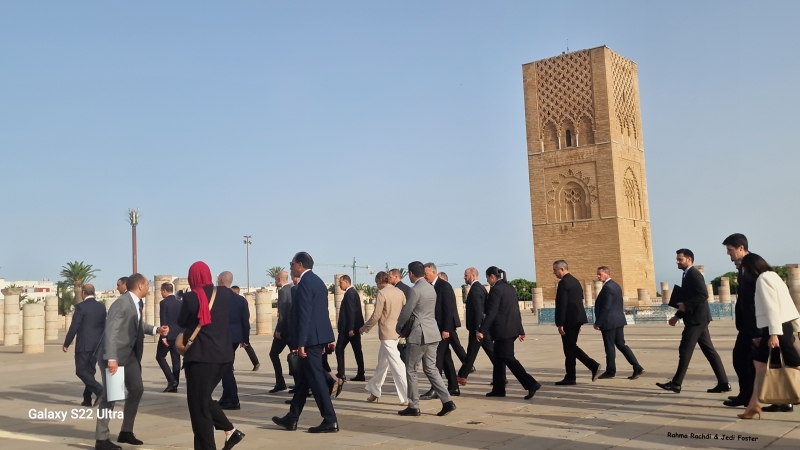
PM Lecornu/Akhannouche Mausoleum Mohamed V, Rabat
Source: Rahma Sophia Rachdi, Jedi Foster
Source: Rahma Sophia Rachdi, Jedi Foster
"THE LIVING AND LASTING FOUNDATION OF OUR RELATIONSHIP" Beyond strategy and economics, Prime Minister Akhannouch placed human links at the heart of the partnership, speaking of “students, researchers, entrepreneurs, artists, creators and members of our diasporas” who “contribute every day to the rapprochement of our peoples and the mutual enrichment of our cultures.” In terms of human capital, he highlighted joint efforts in higher education, scientific research, vocational training, innovation and talent mobility, as well as cultural cooperation, intercultural dialogue, shared heritage and “Human exchanges ,” described as “the living and lasting foundation of our relationship.”
MAROCANITÉ, SAHARA UN RESOLUTION 2797 AND INTERNATIONAL RECOGNITION
This difference became central on 31 October 2025, when the UN Security Council adopted Resolution 2797 on the Moroccan Sahara by 11 votes in favour, none against, with three abstentions and one member not participating. The text, sponsored by the United States and actively supported by France, renews the mandate of MINURSO until October 2026 but, above all, designates for the first time in explicit terms the autonomy plan proposed by Morocco in 2007 as “the most credible and realistic” basis and “central reference” for a political solution.
For Rabat, it is a diplomatic turning point: autonomy under Moroccan sovereignty ceases to be one option among others and becomes, de facto, the international benchmark, weakening the demand for a referendum including independence which the Polisario Front, backed by Algeria, had long placed at the centre of its strategy. The domino effect is immediate: European, Arab and African partners align their positions with the new UN language, consolidating support for Morocco’s approach and further isolating the maximalist independence line.
This difference became central on 31 October 2025, when the UN Security Council adopted Resolution 2797 on the Moroccan Sahara by 11 votes in favour, none against, with three abstentions and one member not participating. The text, sponsored by the United States and actively supported by France, renews the mandate of MINURSO until October 2026 but, above all, designates for the first time in explicit terms the autonomy plan proposed by Morocco in 2007 as “the most credible and realistic” basis and “central reference” for a political solution.
For Rabat, it is a diplomatic turning point: autonomy under Moroccan sovereignty ceases to be one option among others and becomes, de facto, the international benchmark, weakening the demand for a referendum including independence which the Polisario Front, backed by Algeria, had long placed at the centre of its strategy. The domino effect is immediate: European, Arab and African partners align their positions with the new UN language, consolidating support for Morocco’s approach and further isolating the maximalist independence line.
In February 2026, Washington hosted a third round of international consultations on the Sahara, organised under Resolution 2797, to operationalise this new framework “without preconditions”, and to translate the autonomy plan into an institutional architecture: tripartite regional parliament, shared management of resources, and a system of local self?government validated within the sovereign framework of the Kingdom. In his speech on the evening of the vote, H.M King Mohammed VI described the UN decision as a “historic moment” for the Moroccan nation and used it to extend a hand both to Algeria and to the populations of the Sahara, presenting the autonomy proposal not only as a diplomatic victory but as a path to stability and co?development for the whole region.
PRIME MINISTER LECORNU: A “TURNING POINT” AND PATH TOWARDS A TREATY
In his introductory remarks, Prime Minister Sebastien Lecornu echoed his counterpart Aziz Akhannouch’s language, explicitly calling Rabat “a turning point”, “un moment charnière, in the trajectory opened by the 2024 state visit. He thanked “His Majesty, the entire government of His Majesty” for a welcome “not only protocolary but full of emotions,” including homage at the mausoleum of Mohammed V and Hassan II, and insisted that restarting the RHN agenda was “absolutely indispensable” given the seven?year gap and a complex domestic agenda in France.
Speaking about the Sahara, Prime Minister Sebastien Lecornu recalled that France’s position had already been “made crystal clear” by President Emmanuel Macron in his message to H.M King Mohammed VI for Throne Day on 30 July 2024, in which the French president officially stated that “the present and the future of the Sahara fall within the framework of Moroccan sovereignty”; Prime Minister Lecornu added that this stance is “intangible”, that it “will not vary”, and that Paris intends “to draw all the consequences” from it in the years ahead.
In his introductory remarks, Prime Minister Sebastien Lecornu echoed his counterpart Aziz Akhannouch’s language, explicitly calling Rabat “a turning point”, “un moment charnière, in the trajectory opened by the 2024 state visit. He thanked “His Majesty, the entire government of His Majesty” for a welcome “not only protocolary but full of emotions,” including homage at the mausoleum of Mohammed V and Hassan II, and insisted that restarting the RHN agenda was “absolutely indispensable” given the seven?year gap and a complex domestic agenda in France.
Speaking about the Sahara, Prime Minister Sebastien Lecornu recalled that France’s position had already been “made crystal clear” by President Emmanuel Macron in his message to H.M King Mohammed VI for Throne Day on 30 July 2024, in which the French president officially stated that “the present and the future of the Sahara fall within the framework of Moroccan sovereignty”; Prime Minister Lecornu added that this stance is “intangible”, that it “will not vary”, and that Paris intends “to draw all the consequences” from it in the years ahead.
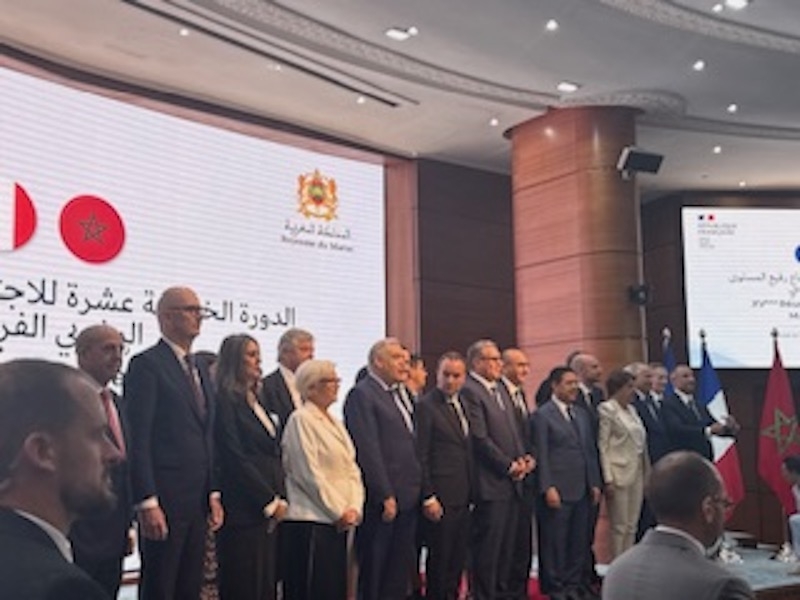
Post Contracts Signature Photo RHN/HLM, Rabat, Morocco
Source: Rahma Sophia Rachdi, Jedi Foster
Source: Rahma Sophia Rachdi, Jedi Foster
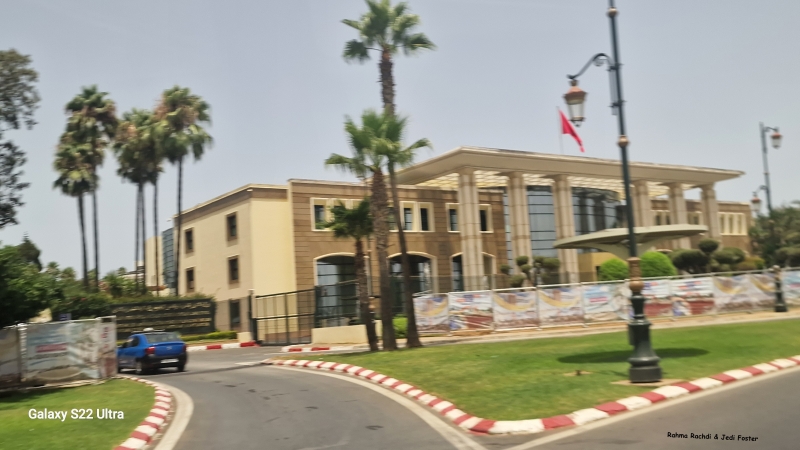
Moroccan Foreign Affairs Ministry Facade, rabat
Source: Rahma Sophia Rachdi, Jedi Foster
Source: Rahma Sophia Rachdi, Jedi Foster
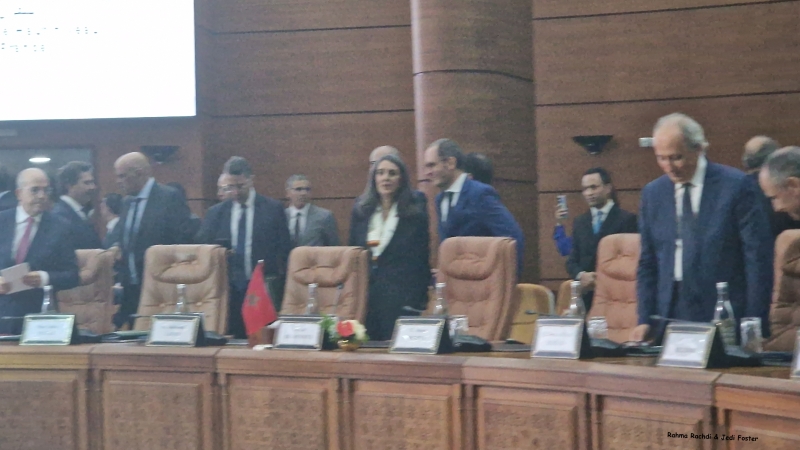
Moroccan Ministers at RHN/HLM, Rabat, MEMA
Source: Rahma Sophia Rachdi, Jedi Foster
Source: Rahma Sophia Rachdi, Jedi Foster
PRIME MINISTER LECORNU TO TAKE STAKE OF THE BILATERAL FARNCO MORROCCAN PARTNERSHIP
Sebastien Lecornu recalled that he had been by President Macron’s side to visit HM King Mohammed VI, in Morocco, in October 2024 as defence minister when “many decisions were taken with an essential promise: a change of scale in the bilateral relationship.” Since then, “instructions have been given by our two Heads of State” and the rhythm has been intense: “around twenty visits by Moroccan ministers to France” and “16 visits by French ministers to Morocco.” The RHN, he said, allows not only “to make a progress review of the decisions taken by the two Heads of State, to draw conclusions on public policies,” notably in security, counter?terrorism and wider destabilisations, but also “to move towards another important moment that we await with impatience: the state visit of His Majesty to France.”
That visit “should be able to lead and result in an extraordinary friendship treaty, going even beyond the Reinforced Exceptional Partnership decided during the president’s state visit.” For Prime Minister Lecornu, bringing “so many ministers” to Rabat is about “trying to change scale in the bilateral relation, change scale for ourselves, and change scale between us for others.” He cited Morocco’s role with the European Union, where France wants “to be a mooring port for this relationship”, and convergent interests in Africa, from security to demographics and environmental challenges.
STOCK/TAKING AND PROJECTION: SECURITY, CULTURE, ECONOMY
Substantively, the Rabat RHN played a double role of stock?taking and projection. In stock?taking terms, both sides used the format to “measure the path accomplished” since October 2024, as Prime Mnister Akhannouch put it, and to “accelerate the implementation of commitments subscribed” under the Reinforced Exceptional Partnership. Prime Minister Lecornu spoke of using the meeting to “make a progress sreview of the decisions taken by the two Heads of State,” and “to allow our two Heads of State to take historic decisions in the coming weeks and months.”
In security and defense, the bilateral agenda has focused on counter?terrorism, irregular migration, organized crime and drug trafficking, as well as on a more structured dialogue on armament and defense industry, now anchored in terms of reference for a bilateral committee. In culture, France appeared as guest country at the International Book and Publishing Fair in Rabat, while Morocco was guest of honor at the Festival of Art History in Fontainebleau, signaling a deliberate effort to rebalance cultural visibility.
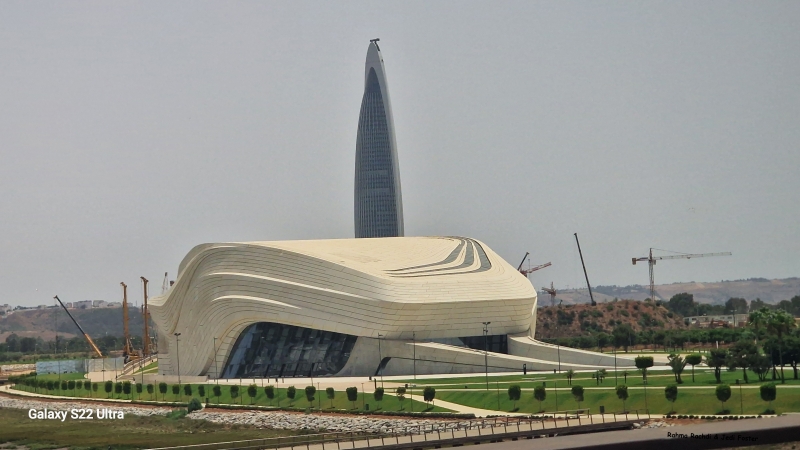
Mohamed VI Tower, New Theater, Rabat, Morocco
Source: Rahma Sophia Rachdi, Jedi Foster
Source: Rahma Sophia Rachdi, Jedi Foster
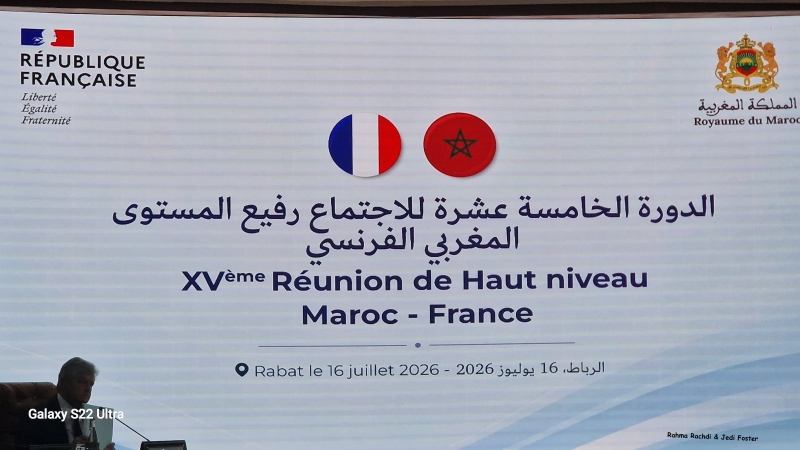
French PM S.Lecornu/Moroccan PM A. Akhannouche RHN, Rabat
Source: Rahma Sophia Rachdi, Jedi Foster
Source: Rahma Sophia Rachdi, Jedi Foster
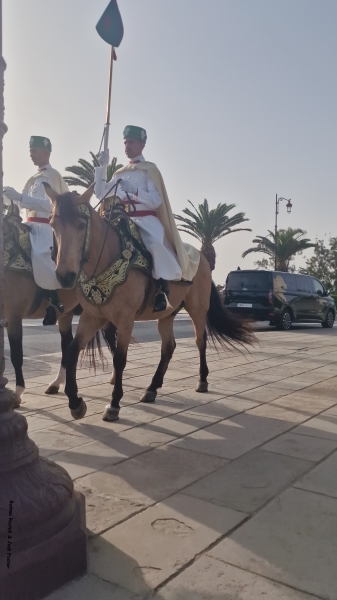
Royal Guard Rabat, Morocco
Source: Rahma Sophia Rachdi, Jedi Foster
Source: Rahma Sophia Rachdi, Jedi Foster
Economically, structural projects illustrate the industrial dimension of the partnership: extension of Safran Electronics & Defense’s site for new production lines; a new Alstom activity in Fes to produce train driving desks; and joint work on an electrical interconnection between France and Morocco building on the energy?connectivity partnership signed during Macron’s 2024 visit. Conscious of the stakes of energy transition and security, both countries aim to identify innovative, viable projects to export renewable electricity from Morocco to France.
FIFTEEN PLUS AGREEMENTS AND A SCRIPTED CEREMONY
The RHN (HLM) plenary culminated in the signature of more than fifteen texts deemed strategic, including decentralised cooperation, a Regional Express Network (RER) line in Rabat, a water?policy partnership, a development plan for the Casablanca–Settat region, civil?aviation arrangements, programs for artists’ residencies, cooperation in cinema and audiovisual sectors, and a declaration on teaching Arabic and history?geography in the French education network.
A solemn ceremony framed these signatures: for each agreement or letter of intent, a Moroccan diplomat formally announced the text, called the French minister and his or her Moroccan counterpart to the table, and the room applauded as each document was signed, while a dense pool of cameras and photographers captured the “family photo” moments and handshakes that visually anchor this new phase of the partnership.
HEAVY DELEGATIONS OF 12 FRENHC MINISTERS AND A TESTED FORMAT
The importance Paris attaches to the Rabat RHN appears clearly in the composition of its delegation: Prime Minister Lecornu arrived with twelve ministers covering interior, defence, economy and finance, agriculture, foreign affairs, overseas territories, culture, transport, vocational education, AI and digital, foreign trade and Francophonie, alongside parliamentary actors such as the president of the France–Morocco friendship group in the Senate and a French MP.
On the Moroccan side, ministers responsible for interior, economy and finance, industry and trade, education, agriculture, transport, culture, defence administration, digital transition and external trade joined the two foreign ministers and ambassadors, matching the French inter-ministerial weight.
The importance Paris attaches to the Rabat RHN appears clearly in the composition of its delegation: Prime Minister Lecornu arrived with twelve ministers covering interior, defence, economy and finance, agriculture, foreign affairs, overseas territories, culture, transport, vocational education, AI and digital, foreign trade and Francophonie, alongside parliamentary actors such as the president of the France–Morocco friendship group in the Senate and a French MP.
On the Moroccan side, ministers responsible for interior, economy and finance, industry and trade, education, agriculture, transport, culture, defence administration, digital transition and external trade joined the two foreign ministers and ambassadors, matching the French inter-ministerial weight.
In institutional terms, this density signals a will to anchor the partnership not only at head of state and head of government level, but across administrations and legislatures. In political terms, it turns the RHN into a stress test for the narrative both governments now repeat: that France and Morocco have moved from a post- colonial, sometimes fragile relationship to a Reinforced Exceptional Partnership built on sovereignty, human exchanges and peer-to-peer projects. Sources: Economie.gouv.fr. wikipedia, government.fr, IMF
Because this High-Level Meeting is also the first foreign trip of Prime Minister Sebastien Lecornu, deliberately scheduled ahead of the forthcoming state visit of HM King Mohammed VI to France, it already stands as a moment of high historical significance in the bilateral trajectory. If that visit leads to the signature of an extraordinary friendship treaty between France and Morocco, sealing at sovereign level the architecture of the partnership and the letters of intent signed in Rabat, it will become clear that what happened in July 2026 was not just one more meeting, but the political moment when a new chapter was truly written.
Because this High-Level Meeting is also the first foreign trip of Prime Minister Sebastien Lecornu, deliberately scheduled ahead of the forthcoming state visit of HM King Mohammed VI to France, it already stands as a moment of high historical significance in the bilateral trajectory. If that visit leads to the signature of an extraordinary friendship treaty between France and Morocco, sealing at sovereign level the architecture of the partnership and the letters of intent signed in Rabat, it will become clear that what happened in July 2026 was not just one more meeting, but the political moment when a new chapter was truly written.
This article is reported on site in Rabat by a Franco-Moroccan disabled wheelchair user correspondent, embedded in the official press pool travelling up with the Prime Minister Sebastien Lecornu, and moving throughout the High-Level Meeting and its side sequences in a wheelchair; this perspective informs the narrative choices, descriptions of access and protocol, and the attention paid to how both countries translate their “human exchanges” into concrete, inclusive practices in different ways, accordingly to their customs and values.
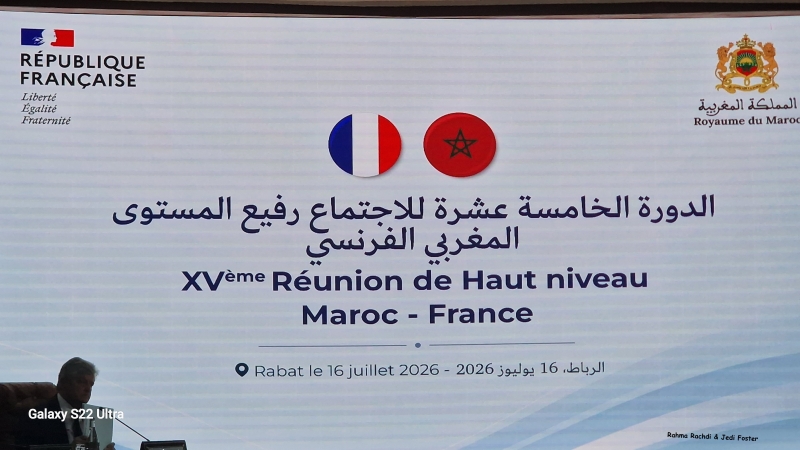
French PM S.Lecornu/Moroccan PM A. Akhannouche RHN, Rabat
Source: Rahma Sophia Rachdi, Jedi Foster
Source: Rahma Sophia Rachdi, Jedi Foster
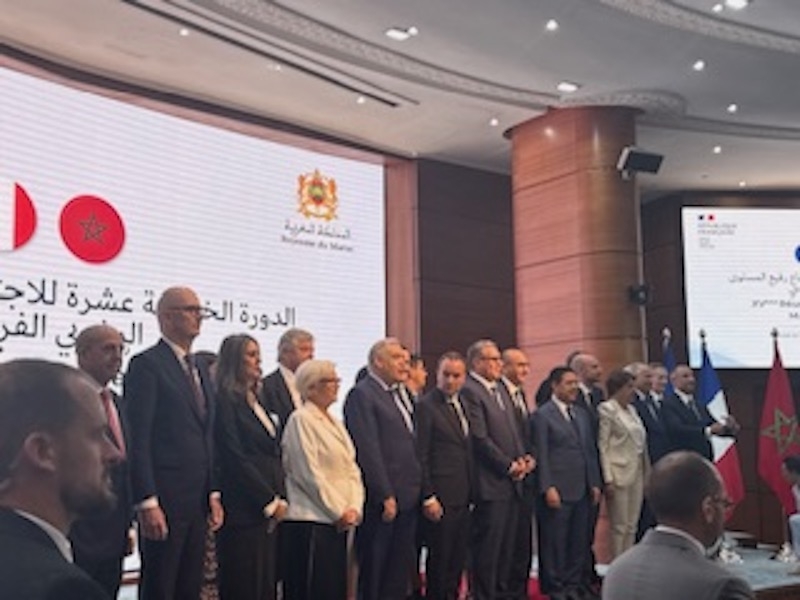
French PM S.Lecornu/Moroccan PM A. Akhannouche RHN, Rabat
Source: Rahma Sophia Rachdi, Jedi Foster
Source: Rahma Sophia Rachdi, Jedi Foster
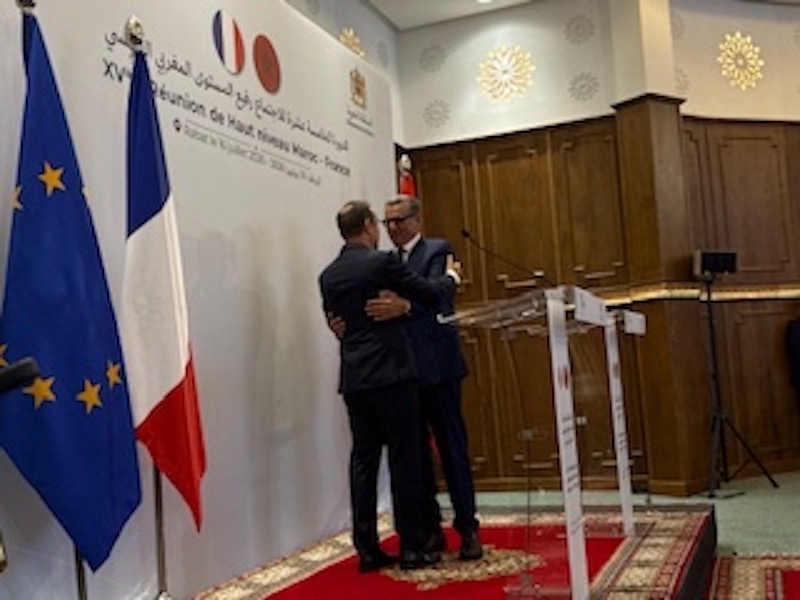
French PM S.Lecornu/Moroccan PM A. Akhannouche RHN, Rabat
Source: Rahma Sophia Rachdi, Jedi Foster
Source: Rahma Sophia Rachdi, Jedi Foster
Liability for this article lies with the author, who also holds the copyright. Editorial content from USPA may be quoted on other websites as long as the quote comprises no more than 5% of the entire text, is marked as such and the source is named (via hyperlink).