
Politics
3rd 49.3 KEEPS 2026 BUDGET ALIVE BUT EXPOSES LECORNU’S WEAK GRIP ON PARLIAMENT
FINAL CONSTITUTIONAL GAMBLE
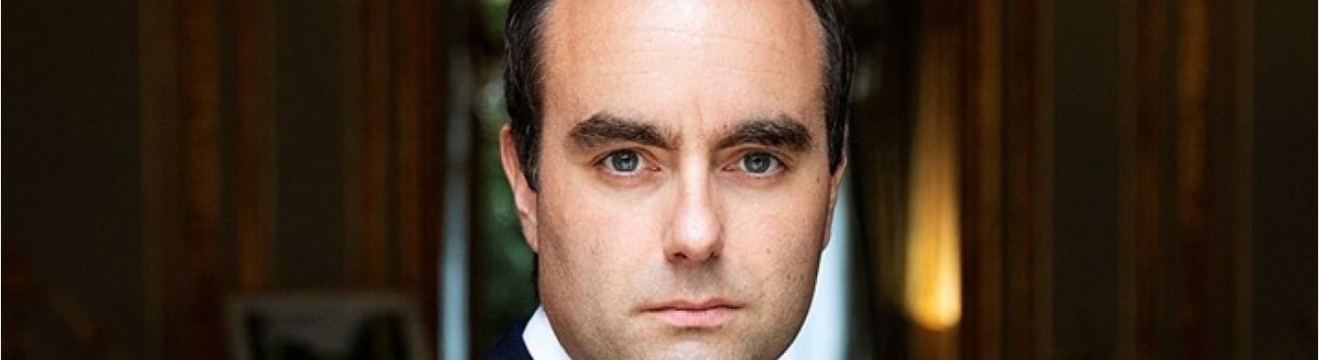
Prime Minister Sebastien Lecornu (Source: French government)
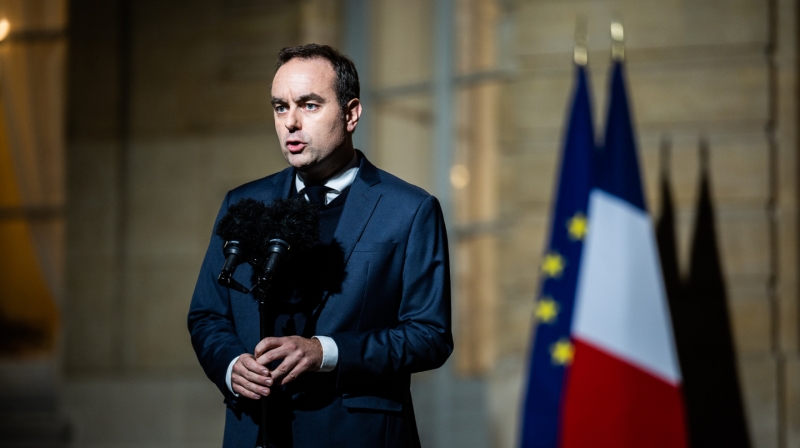
Prime Minister Sebastien Lecornu
(Source: TV Caption BFM)
(Source: TV Caption BFM)
AN “IMPERFECT BUT NECESSARY” FINANCE BILL
Government messaging now revolves around the idea of an “imperfect but useful” budget. Public Accounts Minister Amelie de Montchalin argues that the 2026 bill offers households and markets a degree of visibility after months of political turbulence, while promising to edge the deficit down without resorting to headline tax increases. To secure minimal goodwill from parts of the left and centre right, the majority has sprinkled in a few social concessions, from extended cheap canteen meals for students to tweaks in support for low paid workers. Yet these adjustments have not been enough to build a solid coalition behind the text, hence this final recourse to 49.3.
Government messaging now revolves around the idea of an “imperfect but useful” budget. Public Accounts Minister Amelie de Montchalin argues that the 2026 bill offers households and markets a degree of visibility after months of political turbulence, while promising to edge the deficit down without resorting to headline tax increases. To secure minimal goodwill from parts of the left and centre right, the majority has sprinkled in a few social concessions, from extended cheap canteen meals for students to tweaks in support for low paid workers. Yet these adjustments have not been enough to build a solid coalition behind the text, hence this final recourse to 49.3.
As expected, the new 49.3 immediately triggered two fresh motions of no confidence: one orchestrated by the radical left (La France Insoumise, Jean Luc Melenchon’s Party) and formally carried by the Communist led GDR group, the other announced by the National Rally (marine Le Pen’s Far Right’s party). Both denounce what they describe as a budget passed “by force” and a Prime Minister who governs by constitutional shortcut rather than debate. In reality, the arithmetic has hardly changed. Without the Socialists or the traditional right joining in, neither motion is likely to reach the threshold needed to topple the cabinet. The most probable scenario is that both are defeated on Monday and the 2026 budget is deemed adopted in their wake.
BETWEEN TERRITORIAL STORYTELLING AND PARISIAN BLOCKAGE
The day PM Sebastien Lecornu pulled the trigger on 49.3 he was also scheduled in rural Eure et Loir to launch new “contracts for the future” in agriculture and to showcase the state’s support for local production. This split screen day captures the paradox of the moment: a Prime Minister eager to present himself as close to the territories, while in Paris he relies on an exceptional constitutional lever because he cannot count votes in the Assembly. Even the logistics told a story, with journalists in wheelchairs unable to join the trip because the transport provided was not accessible a concrete reminder that the rhetoric of inclusion still collides with reality on the ground.
The day PM Sebastien Lecornu pulled the trigger on 49.3 he was also scheduled in rural Eure et Loir to launch new “contracts for the future” in agriculture and to showcase the state’s support for local production. This split screen day captures the paradox of the moment: a Prime Minister eager to present himself as close to the territories, while in Paris he relies on an exceptional constitutional lever because he cannot count votes in the Assembly. Even the logistics told a story, with journalists in wheelchairs unable to join the trip because the transport provided was not accessible a concrete reminder that the rhetoric of inclusion still collides with reality on the ground.
STABILITY BOUGHT AT THE PRICE OF DEMOCRATIC FATIGUE
Assuming the no confidence votes fail, PM Sebastien Lecornu will have achieved his immediate goal: France will enter 2026 with a budget, a defined deficit path and no shock rise in taxation. But the way he gets there matters. Each additional use of 49.3 pushes the country a bit further into a grey zone where the letter of the Constitution is respected, yet the spirit of parliamentary deliberation feels hollowed out. The government can claim stability; the opposition will claim democratic exhaustion. For now, one conclusion stands out: the Prime Minister has secured a budget, but he still has not found a majority.
Assuming the no confidence votes fail, PM Sebastien Lecornu will have achieved his immediate goal: France will enter 2026 with a budget, a defined deficit path and no shock rise in taxation. But the way he gets there matters. Each additional use of 49.3 pushes the country a bit further into a grey zone where the letter of the Constitution is respected, yet the spirit of parliamentary deliberation feels hollowed out. The government can claim stability; the opposition will claim democratic exhaustion. For now, one conclusion stands out: the Prime Minister has secured a budget, but he still has not found a majority.
Liability for this article lies with the author, who also holds the copyright. Editorial content from USPA may be quoted on other websites as long as the quote comprises no more than 5% of the entire text, is marked as such and the source is named (via hyperlink).