Entertainment
FROM LE TOUQUET TO DOUAI, THE WAR REPORTING FESTIVAL CELEBRATES ITS 33rd EDITION
CHAIRED BY GEORGE MARQUE BOUARET
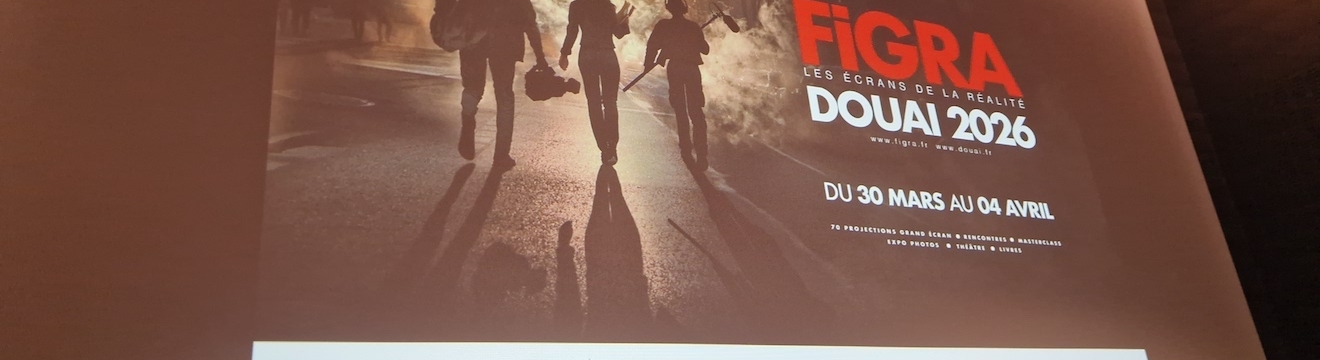
FIGRA 2026 Poster (Source: Rahma Sophia Rachdi, Jedi Foster)
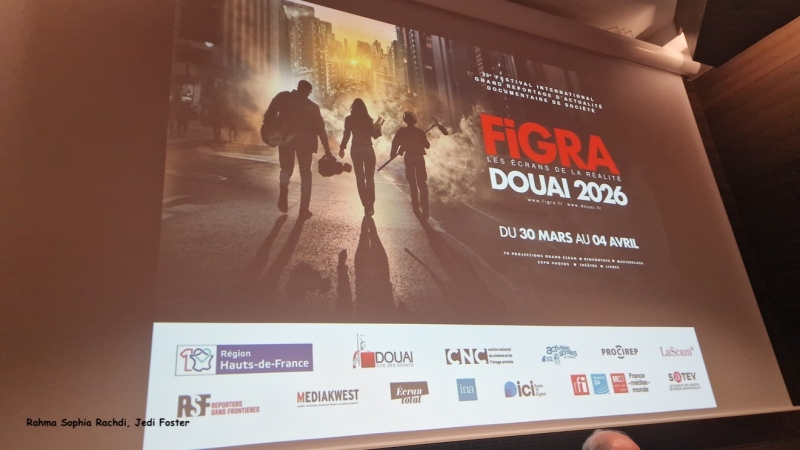
FIGRA 2026 Poster
(Source: Rahma Sophia rachdi Jedi Foster)
(Source: Rahma Sophia rachdi Jedi Foster)
After covering FIGRA regularly in 2010, 2011 and 2012, long before my disability, I was back this year for the press conference, held on 17 February at the SCAM, the beautiful town house tucked behind Parc Monceau in Paris’s 8th arrondissement. It was a modest, almost intimate gathering, around twenty journalists and producers, but with the familiar energy of a festival that has always taken images of war and society seriously. This is a field report. It is based on first hand observations made on site by our handy journalist, complemented only by publicly available information and personal notes.
FIGRA An IMPACTFUL FESTIVAL THAT REFUSES TO “LOWER ITS ARMS”
The 2026 edition of FIGRA, the International Festival of Major News Reporting and Social Documentary, celebrates the festival’s 33rd birthday with a slogan that sounds like both a promise and a wink: “LET’S NOT GIVE UP.” For most people, it simply means “never give up.” For me, a triple disabled journalist who moves around in an electric wheelchair and has a non functional left arm, the phrase inevitably raises a smile: I literally cannot “keep both arms up,” but I have never given up on reporting.
After covering FIGRA regularly in 2010, 2011 and 2012, long before my disability, I was back this year for the press conference, held on 17 February at the SCAM, the beautiful town house tucked behind Parc Monceau in Paris’s 8th arrondissement. It was a modest, almost intimate gathering, around twenty journalists and producers, yet with the familiar energy of a festival that has always taken images of war and society seriously.
The 2026 edition of FIGRA, the International Festival of Major News Reporting and Social Documentary, celebrates the festival’s 33rd birthday with a slogan that sounds like both a promise and a wink: “LET’S NOT GIVE UP.” For most people, it simply means “never give up.” For me, a triple disabled journalist who moves around in an electric wheelchair and has a non functional left arm, the phrase inevitably raises a smile: I literally cannot “keep both arms up,” but I have never given up on reporting.
After covering FIGRA regularly in 2010, 2011 and 2012, long before my disability, I was back this year for the press conference, held on 17 February at the SCAM, the beautiful town house tucked behind Parc Monceau in Paris’s 8th arrondissement. It was a modest, almost intimate gathering, around twenty journalists and producers, yet with the familiar energy of a festival that has always taken images of war and society seriously.
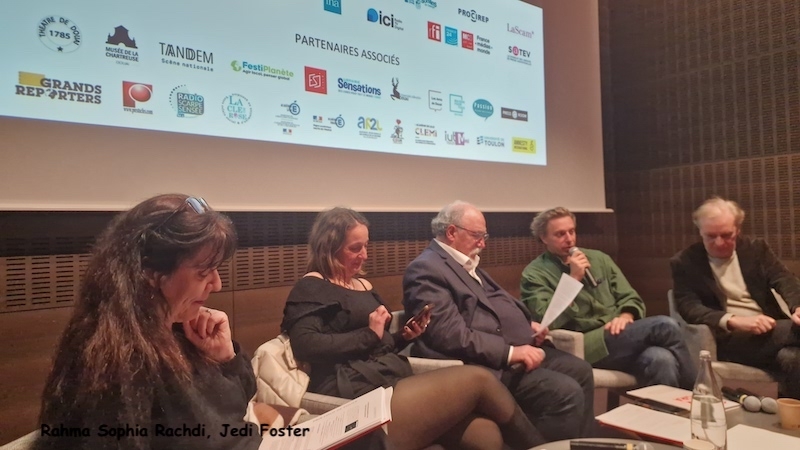
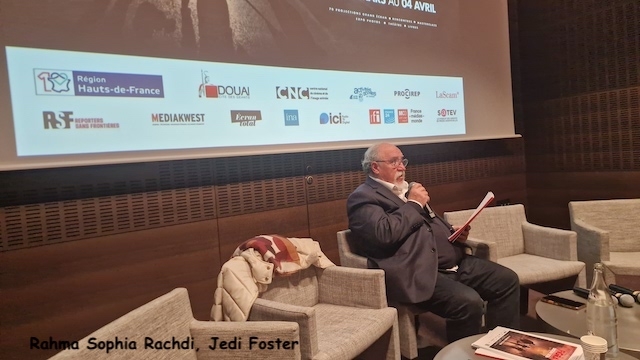
FIGRA 2026 Press Conf chaired by George Marquet Bouaret
Source: Rahma Sophia Rachdi, Jedi Foster
Source: Rahma Sophia Rachdi, Jedi Foster
FROM LE TOUQUET TO DOUAI: FIGRA’S NEW HOME
FIGRA is a rare platform in France entirely dedicated to long form current affairs reporting and documentaries about society, often with a strong human rights dimension. For years it was hosted by the seaside town of Le Touquet, in the Hauts de France region. Then came political and financial difficulties: budget cuts, shrinking subsidies and the need to find a more stable municipal partner.
Since 2020, the festival has been permanently anchored in Douai, still in Hauts de France. The city council voted unanimously to welcome the event, and FIGRA settled there for an initial period of four years. In 2026, the festival will run from 30 March to 4 April, open to the general public, schools and professionals. Around 70 films, grand reportage and creative documentaries, will be screened, covering war zones, human rights abuses, social struggles and major global issues.
FIGRA is a rare platform in France entirely dedicated to long form current affairs reporting and documentaries about society, often with a strong human rights dimension. For years it was hosted by the seaside town of Le Touquet, in the Hauts de France region. Then came political and financial difficulties: budget cuts, shrinking subsidies and the need to find a more stable municipal partner.
Since 2020, the festival has been permanently anchored in Douai, still in Hauts de France. The city council voted unanimously to welcome the event, and FIGRA settled there for an initial period of four years. In 2026, the festival will run from 30 March to 4 April, open to the general public, schools and professionals. Around 70 films, grand reportage and creative documentaries, will be screened, covering war zones, human rights abuses, social struggles and major global issues.
A GENERAL DELEGATE WHO SETS THE TONE BY GENERAL DELEGATE GEORGES MARQUET BOUARET
At SCAM, FIGRA’s general delegate Georges Marquet Bouaret opened the press conference by reading from his editorial and repeating the slogan: “LET’S NOT GIVE UP.” For him, this means refusing fatigue, censorship, indifference and the temptation to look away from conflicts and injustices. He reminded us that, in a context where journalists are killed, kidnapped or harassed on several continents, festivals like FIGRA serve as both a refuge and a megaphone for grand reporters.
At SCAM, FIGRA’s general delegate Georges Marquet Bouaret opened the press conference by reading from his editorial and repeating the slogan: “LET’S NOT GIVE UP.” For him, this means refusing fatigue, censorship, indifference and the temptation to look away from conflicts and injustices. He reminded us that, in a context where journalists are killed, kidnapped or harassed on several continents, festivals like FIGRA serve as both a refuge and a megaphone for grand reporters.
He ran through the main pillars of the 2026 edition:
• Advance screenings and special evenings devoted to major investigations;
• A focus “Autour d’Albert Londres”, highlighting the heritage of the great French reporter and his heirs;
• Interactive literary encounters with authors whose work feeds into documentaries and investigations;
• Two main competitive sections, films under 40 minutes and over 40 minutes, plus thematic sidebars and masterclasses.
The tone was that of a craftsperson proud of his line up rather than a showman: precise, fond of details, keen to name the producers and broadcasters as well as the journalists in front of the camera.
• Advance screenings and special evenings devoted to major investigations;
• A focus “Autour d’Albert Londres”, highlighting the heritage of the great French reporter and his heirs;
• Interactive literary encounters with authors whose work feeds into documentaries and investigations;
• Two main competitive sections, films under 40 minutes and over 40 minutes, plus thematic sidebars and masterclasses.
The tone was that of a craftsperson proud of his line up rather than a showman: precise, fond of details, keen to name the producers and broadcasters as well as the journalists in front of the camera.
JURIES, INVESTIGATIONS AND A CERTAIN “GRAVEDIGGER” OF NURSING HOME ABUSES
Among the jurors and guests mentioned, one name inevitably stands out: journalist and writer Victor Castanet, author of the best selling investigation "Les Fossoyeurs" ( "The Gravediggers"), best seller, on abuses in private nursing homes. His undercover reporting on the ORPEA (Largest Nursing Homes Private ) system helped trigger judicial inquiries and a national debate on the treatment of elderly residents. Having him on a FIGRA jury is a way of reminding everyone that documentaries and books can have very concrete consequences when they uncover systemic violence.
Around him, several other figures from TV newsrooms, independent production companies and NGOs will sit on the various juries, ensuring a mix of editorial backgrounds and sensitivities. For filmmakers and reporters whose work is often broadcast late at night or confined to niche channels, FIGRA offers something that is both symbolic and practical: a place where their films are screened in a cinema, debated in public and sometimes awarded prizes that genuinely help fund the next project.
Among the jurors and guests mentioned, one name inevitably stands out: journalist and writer Victor Castanet, author of the best selling investigation "Les Fossoyeurs" ( "The Gravediggers"), best seller, on abuses in private nursing homes. His undercover reporting on the ORPEA (Largest Nursing Homes Private ) system helped trigger judicial inquiries and a national debate on the treatment of elderly residents. Having him on a FIGRA jury is a way of reminding everyone that documentaries and books can have very concrete consequences when they uncover systemic violence.
Around him, several other figures from TV newsrooms, independent production companies and NGOs will sit on the various juries, ensuring a mix of editorial backgrounds and sensitivities. For filmmakers and reporters whose work is often broadcast late at night or confined to niche channels, FIGRA offers something that is both symbolic and practical: a place where their films are screened in a cinema, debated in public and sometimes awarded prizes that genuinely help fund the next project.
FIGRA 2026 Press Conf chaired by George Marquet Bouaret
Source: Rahma Sophia Rachdi, Jedi Foster
Source: Rahma Sophia Rachdi, Jedi Foster
A PERSONAL RETURN TO A UNIQUE FESTIVAL
Sitting in the SCAM’s ornate room, listening to Georges Marquet Bouaret unfold the programme, I was struck by a double feeling. On the one hand, nothing has changed: the same mix of rigour and passion, the same obsession with current affairs, the same desire to give space to images and stories that conventional news formats cannot accommodate. On the other hand, everything has changed: wars have multiplied, information is consumed in seconds on phones, and my own body is no longer the same as when I last came here more than a decade ago.
At SCAM, the press conference looked nothing like the stiff formats we are used to. Seated in the salon of the Hôtel particulier Velasquez, Georges Marquet Bouaret’s guests took turns grabbing the microphone, sharing anecdotes, talking about their past FIGRA experiences and, above all, expressing how genuinely happy they were to be there. It was highly professional , budgets, partnerships and editorial stakes were all on the table, yet the tone remained relaxed, closer to an informal conversation between accomplices than to a conventional briefing.
Sitting in the SCAM’s ornate room, listening to Georges Marquet Bouaret unfold the programme, I was struck by a double feeling. On the one hand, nothing has changed: the same mix of rigour and passion, the same obsession with current affairs, the same desire to give space to images and stories that conventional news formats cannot accommodate. On the other hand, everything has changed: wars have multiplied, information is consumed in seconds on phones, and my own body is no longer the same as when I last came here more than a decade ago.
At SCAM, the press conference looked nothing like the stiff formats we are used to. Seated in the salon of the Hôtel particulier Velasquez, Georges Marquet Bouaret’s guests took turns grabbing the microphone, sharing anecdotes, talking about their past FIGRA experiences and, above all, expressing how genuinely happy they were to be there. It was highly professional , budgets, partnerships and editorial stakes were all on the table, yet the tone remained relaxed, closer to an informal conversation between accomplices than to a conventional briefing.
Among them, Jean Paul Mulot, regional councillor in charge of International Relations for the Hauts de France regional council, used the discussion to look beyond the festival itself. Suggesting that the 2026 Grand Prix should not end its life in Douai, he floated an idea halfway between a joke and a very serious proposal: “I suggest that the winner of the FIGRA Grand Prix be screened in June during the G7, as part of a round table on artificial intelligence.” It was a way of reminding everyone that FIGRA’s films fully belong in the major international debates on information and technology.
SCAM, A HOUSE OF AUTHORS
The SCAM , “Societe civile des Auteurs Multimedias”, France’s civil society of multimedia authors” (“Multimedia Authors Civil Association”, is a collective management organisation representing and defending the rights of documentary filmmakers, journalists, writers, photographers and, more broadly, creators of non fiction works. Its Paris headquarters are housed in the magnificent Hotel particulier Velasquez in the 8th arrondissement, just behind Parc Monceau, a historic town house that regularly hosts screenings, premieres, professional meetings and press conferences. By choosing SCAM as the venue for its press conference, FIGRA anchors itself in a place that is both a symbol of documentary creation and a living hub for dialogue between authors, producers and broadcasters.
The SCAM , “Societe civile des Auteurs Multimedias”, France’s civil society of multimedia authors” (“Multimedia Authors Civil Association”, is a collective management organisation representing and defending the rights of documentary filmmakers, journalists, writers, photographers and, more broadly, creators of non fiction works. Its Paris headquarters are housed in the magnificent Hotel particulier Velasquez in the 8th arrondissement, just behind Parc Monceau, a historic town house that regularly hosts screenings, premieres, professional meetings and press conferences. By choosing SCAM as the venue for its press conference, FIGRA anchors itself in a place that is both a symbol of documentary creation and a living hub for dialogue between authors, producers and broadcasters.
As a long standing partner of FIGRA, SCAM’s role goes beyond lending its prestigious venue. The organisation supports the festival’s mission to promote in depth reporting and creative documentaries, helps spotlight authors’ work, and contributes to the professional ecosystem by encouraging encounters between filmmakers, journalists and commissioners. For many directors whose films are selected at FIGRA, SCAM is both a rights management ally and a space where their work can be discussed, defended and sometimes awarded.
A PANEL ROOTED IN DOUAI AND HAUTS DE FRANCE
For this intimate press conference at the SCAM’s Hôtel particulier Velasquez on 17 February 2026, FIGRA’s general delegate Georges Marquet Bouaret moderated a panel bringing together several of the festival’s key partners. Around him sat Aurianne Delbarre, deputy mayor for culture of Douai and elected official for the Hauts de France region, Jean Paul Mulot from the CCAS in Douai, journalist and writer Victor Castanet, president of the main jury, and producer Myrto Grecos from the company Découpages.
For this intimate press conference at the SCAM’s Hôtel particulier Velasquez on 17 February 2026, FIGRA’s general delegate Georges Marquet Bouaret moderated a panel bringing together several of the festival’s key partners. Around him sat Aurianne Delbarre, deputy mayor for culture of Douai and elected official for the Hauts de France region, Jean Paul Mulot from the CCAS in Douai, journalist and writer Victor Castanet, president of the main jury, and producer Myrto Grecos from the company Découpages.
Aurianne Delbarre reminded the audience that this would be the sixth Douai based edition and the 33rd FIGRA overall, and insisted on how meaningful it is, in a troubled world, to welcome current affairs reporters for several days at the Cinéma Majestic. Speaking on behalf of mayor Frédéric Chéreau, she said Douai is proud to support what it considers a form of public service: journalism and documentary that help citizens understand their times and “vibrate together” in a cinema. Georges Marquet Bouaret, for his part, thanked the city and the region, highlighting that, from a human, social and economic point of view, this historic partnership with Hauts de France is vital to FIGRA’s survival and development.
HAUTS DE FRANCE, BETWEEN CULTURE AND INFORMATION WARS
Speaking for the region and the CCAS, Jean Paul Mulot stressed that Hauts de France’s support is not just symbolic: “From the first edition held in Douai, Xavier Bertrand chose to increase the culture budget despite the usual uncertainties. That is what politics is about: continuing to invest instead of backing down.” He described delegations of journalists travelling to countries both distant and close. including Ukraine, and recalled that reporters are “screens of reality”, echoing the festival’s own subtitle “Les Ecrans de la réalité”
Speaking for the region and the CCAS, Jean Paul Mulot stressed that Hauts de France’s support is not just symbolic: “From the first edition held in Douai, Xavier Bertrand chose to increase the culture budget despite the usual uncertainties. That is what politics is about: continuing to invest instead of backing down.” He described delegations of journalists travelling to countries both distant and close. including Ukraine, and recalled that reporters are “screens of reality”, echoing the festival’s own subtitle “Les Ecrans de la réalité”
Jean Paul Mulot also pointed to a major concern of this edition: the fight against disinformation and fake news, with partnerships involving universities in Germany and Poland, Sciences Po Lille and the Lille journalism school. Ukrainian and Polish guests are expected to share their perspective on how war today is fought both on the ground and on the front of information. In his view, local and national political life is also a battleground of propaganda and ideas, which makes long form reporting anything but accessory.
ALBERT LONDRES, FAKE NEWS AND THE BOOK AS A REFUGE
Long time partner of the Albert Londres Prize, FIGRA will again host encounters on the legacy of the pioneering French reporter. One of the themes this year is fake news, echoing the last article written by Albert Londres and the contemporary battle over truth. Speakers insisted that journalism now faces a major challenge: for the first time, with artificial intelligence, the very mission of collecting and verifying facts is targeted at its core. Denial of facts and the falsification of reality, they argued, can only be fought by returning to the real, exactly what grand reportage does.
Long time partner of the Albert Londres Prize, FIGRA will again host encounters on the legacy of the pioneering French reporter. One of the themes this year is fake news, echoing the last article written by Albert Londres and the contemporary battle over truth. Speakers insisted that journalism now faces a major challenge: for the first time, with artificial intelligence, the very mission of collecting and verifying facts is targeted at its core. Denial of facts and the falsification of reality, they argued, can only be fought by returning to the real, exactly what grand reportage does.
In this spirit, the festival is pursuing, for the second year, a series of “literature of reality” meetings, chaired by Patrick de Saint Exupéry. He explained how long form investigations increasingly find refuge in books, where authors can work for one or two years with the necessary resources and editorial freedom. Recent titles such as La Meute, on sect like practices on parts of the far left, or DZ Mafia on organised crime, are examples of works that have later become documentaries for the screen, proving the fertile circulation between page and image.
MASTERCLASSES, SCHOOL GROUPS AND A CLOSING NIGHT
Daily masterclasses scheduled around midday will bring together six or seven directors from the selection, including, among others, Juliette Togerin, Juliette Guerin, Pierre Jitzel, Julie Martin and Sylvie Vorengue (Handicap de ma terre). These sessions will allow for broader discussions on form, ethics and the changing conditions of field reporting. Around 1,600 pupils are expected this year, invited to confront images, analyse narratives and learn to decode information in an increasingly complex media environment.
Daily masterclasses scheduled around midday will bring together six or seven directors from the selection, including, among others, Juliette Togerin, Juliette Guerin, Pierre Jitzel, Julie Martin and Sylvie Vorengue (Handicap de ma terre). These sessions will allow for broader discussions on form, ethics and the changing conditions of field reporting. Around 1,600 pupils are expected this year, invited to confront images, analyse narratives and learn to decode information in an increasingly complex media environment.
Local elected officials from the Douai municipal council plan to attend several screenings and debates, underlining once again the city’s commitment. The festival will culminate in a closing ceremony with the announcement of all prizes. Jean Paul Mulot even mentioned the possibility of screening the Grand Prix on 12 June in Lille, during a major summit on artificial intelligence scheduled between VivaTech and the G7, a date rearranged, he noted with a smile, due to the calendar of President Donald Trump
Liability for this article lies with the author, who also holds the copyright. Editorial content from USPA may be quoted on other websites as long as the quote comprises no more than 5% of the entire text, is marked as such and the source is named (via hyperlink).